Filled example (made-up): $9,000 saved, $3,900 a month, $400 a week of unemployment for 16 more weeks, 1 interview per 40 applications — at 8 applications a week the money runs out in week 16.4 and the first paycheck lands in week 24: a $6,840 shortfall.
Job boards answer a low reply rate with more listings. This page turns your own reply rate into the applications a week your money can wait for — after the 10% federal withholding on your benefit (Form W-4V) and counted to your first paycheck, not the offer. For US job seekers on unemployment benefits; nothing you type is uploaded.
Low reply rate? Type yours: at 1 interview per 40 applications and 4 interviews per offer you need 160 applications per offer, and the calculator turns that into applications a week and the week you get paid. Free on this page, as often as you like — no account, no card. A blank spreadsheet or a chatbot will not take 10% off your benefit, price COBRA, or stop the clock at your first paycheck.
Full version — $21 once: the .xlsx to keep and re-run every Friday with your new totals (3 sheets, 12 live formulas; Excel, LibreOffice, Google Sheets) with the sheet this page does not have, “Close the gap”: the monthly spending cut, or the reply rate, that makes your money last to the first paycheck at your current pace — $1,235 a month, or 1 interview per 24.8 applications instead of 1 per 40, in the example. One-time purchase, no subscription. Get the file
Next step: 12.9 applications a week means about 13 new openings a week that fit you. Our job board reads companies' own career pages and sorts every role by the date it was first posted, with roles open 60+ days, re-dated and reposted flagged — open the job board.
The working behind the example
| Your costs per week | $3,900 × 12 ÷ 52 = $900 |
| Benefit you can spend | $400 − 10% withheld = $360 a week |
| Burned while the benefit lasts | $900 − $360 = $540 a week × 16 weeks = $8,640 |
| Weeks your money lasts | $9,000 − $8,640 = $360 ÷ $900 = 0.4 week more → 16.4 |
| Applications per offer | 40 × 4 = 160 |
| Week your first paycheck lands | 160 ÷ 8 a week = 20 weeks + 4 = week 24 |
| Shortfall | 24 − 16.4 = 7.6 weeks × $900 = $6,840 |
| Applications a week to get paid in time | 160 ÷ (16.4 − 4) = 12.9 |
| In the file: “Close the gap” | ($9,000 + $360 × 16) ÷ 24 = $615 a week = $2,665 a month you can carry → cut $3,900 − $2,665 = $1,235 a month · or (16.4 − 4) × 8 ÷ 4 = 1 interview per 24.8 applications |
Three things “savings ÷ costs” gets wrong
Your benefit is taxable. Unemployment compensation is generally income (IRS Topic no. 418). Form W-4V lets the payer withhold 10% of each payment — “No other percentage or amount is allowed.” This page spends 90% of your benefit; if you did not choose withholding, set the 10% aside yourself.
COBRA is not your old paycheck deduction. If you keep your work health plan through COBRA, the premium can be up to 102% of the plan's total cost — your share plus your employer's (U.S. Department of Labor). Put that number in your monthly costs.
The money has to last to the first paycheck, not the offer. A yes is followed by a start date and a first pay period. In the example that is 4 more weeks — the difference between 20 weeks and week 24.
What this does not know: whether your reply rate will change (it assumes it stays the same — an average, not a promise), state income tax on benefits, or how your state treats part-time earnings while you claim. Check those with your state before you count them.
Sources: IRS Form W-4V (Rev. January 2026), irs.gov/pub/irs-pdf/fw4v.pdf · IRS Topic no. 418, Unemployment compensation, irs.gov/taxtopics/tc418 · U.S. Department of Labor, A Worker's Guide to Health Benefits Under COBRA, dol.gov (all read 16 November 2026).
Questions
- What does this job board runway calculator do?
- It answers one question for a job search: does your money last until your first paycheck? You type your cash, monthly costs, weekly unemployment benefit and weeks left, applications per interview, interviews per offer, applications a week and the weeks from a yes to payday. It returns the week your money runs out, the week your first paycheck lands, the dollar shortfall and the applications a week that close it.
- Who is it for?
- US job seekers on unemployment benefits who apply through job boards and need to decide this week whether to send more applications, cut costs or line up bridge income. It uses your own reply rate and your last search, not an industry average, so it works in any field: support, project management, marketing, engineering, healthcare or the trades.
- Why not just divide my savings by my monthly costs?
- Because that answer runs too long. Unemployment benefits are taxable, and Form W-4V lets the payer withhold 10% of each payment and no other rate, so plan on spending 90%. A COBRA premium can be up to 102% of the plan's total cost, not what came out of your paycheck. And the money has to last to your first paycheck, weeks after the offer.
- What is free and what is in the file?
- Free, with no account: the whole answer on this page with your own numbers, as often as you like. The paid .xlsx is yours to keep and re-run every Friday, with 12 live formulas, and adds the 'Close the gap' sheet: the monthly spending cut, or the reply rate, that makes your money last to the first paycheck.
- How does this compare with a paid job board?
- A paid job board sells more listings. TixelJobs costs $9 a year or $4.90 for three months, and its own guide says being on the board makes a role easier to find, not easier to get (read 16 November 2026). No job board tells you how many applications a week your savings can wait for. This page does that free; the file is a one-time purchase, not a subscription.
- How is the shortfall worked out?
- Made-up example: $3,900 × 12 ÷ 52 = $900 a week. Benefit $400 − 10% = $360, so you burn $540 a week for 16 weeks: $8,640. The $360 left lasts 0.4 week more: 16.4 weeks. 40 × 4 = 160 applications ÷ 8 a week = 20 weeks, plus 4 to payday = week 24. Short 7.6 weeks × $900 = $6,840.
Get the full version $21
The .xlsx to keep and re-run every Friday with your new totals (Excel, LibreOffice, Google Sheets; 3 sheets, 12 live formulas) with the sheet the free page does not have — 'Close the gap': the monthly spending cut that makes your money last to the first paycheck at your current pace ($1,235 a month
One payment, one licence key for this tool. The key is shown right after payment.
Paid job boards sell more listings, not the math: TixelJobs is $9 a year or $4.90 for three months (tixeljobs.com, 'Is a paid job board worth it?', updated 22 Sep 2026, read 16 Nov 2026), and its guide says being on the board 'doe
Buy the full version — $21I have a key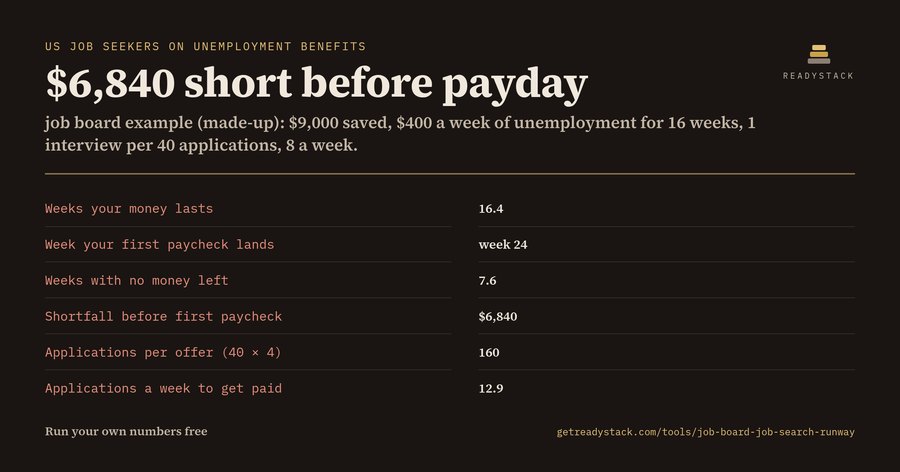
 Job board that reads company career pages directly — every role with its true first-posted date and a flag when it is old, re-dated or reposted
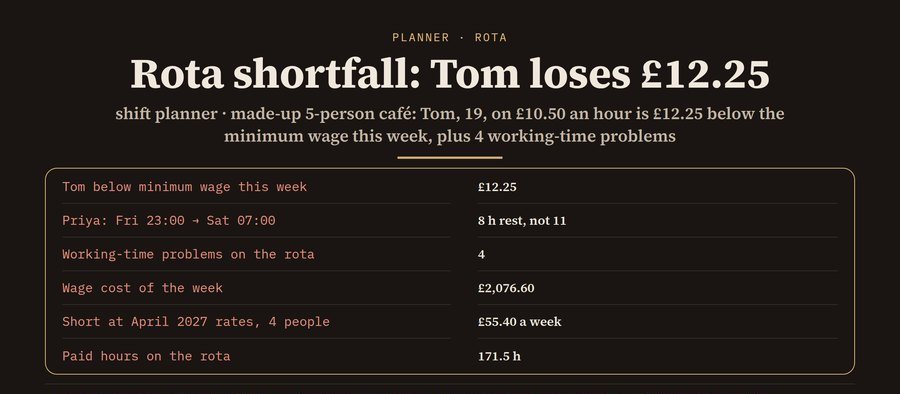 shift planner: UK rota template, wage cost, minimum wage and breaks
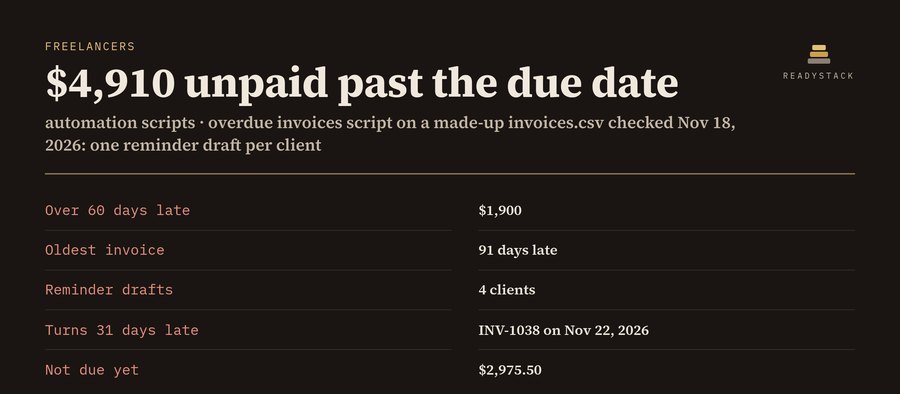 automation scripts — Python: invoices, contacts, bank and files
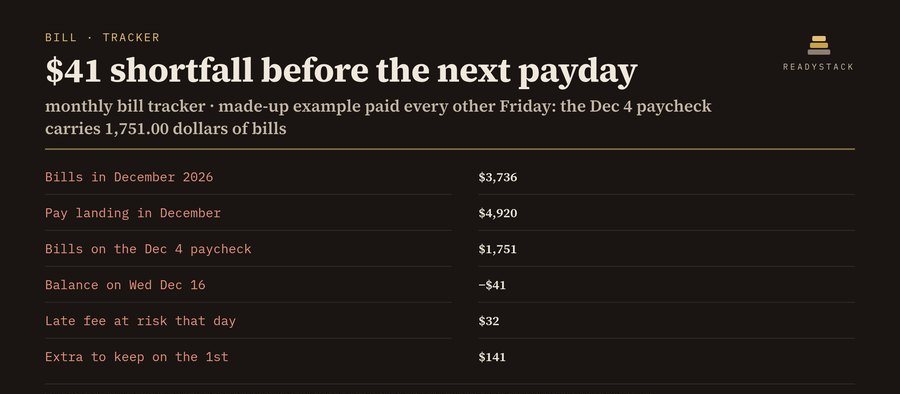 monthly bill tracker: pay-by date, which paycheck and late fee
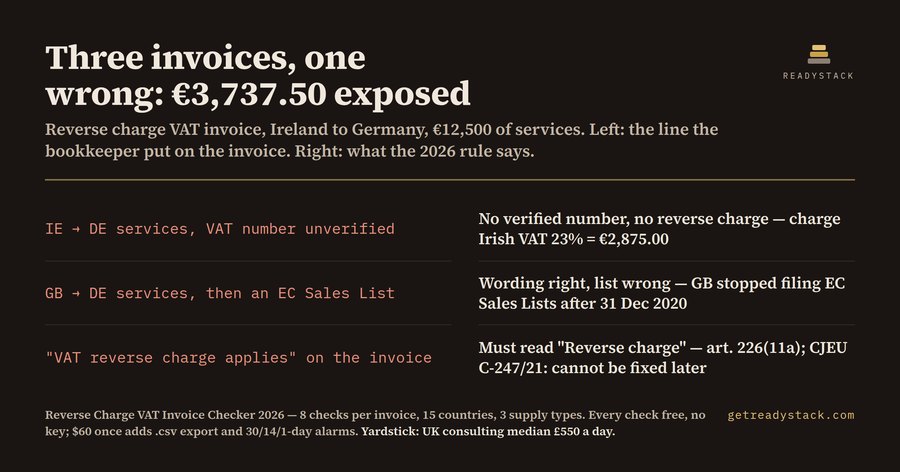 Reverse charge VAT invoice wording — check your invoice wording online
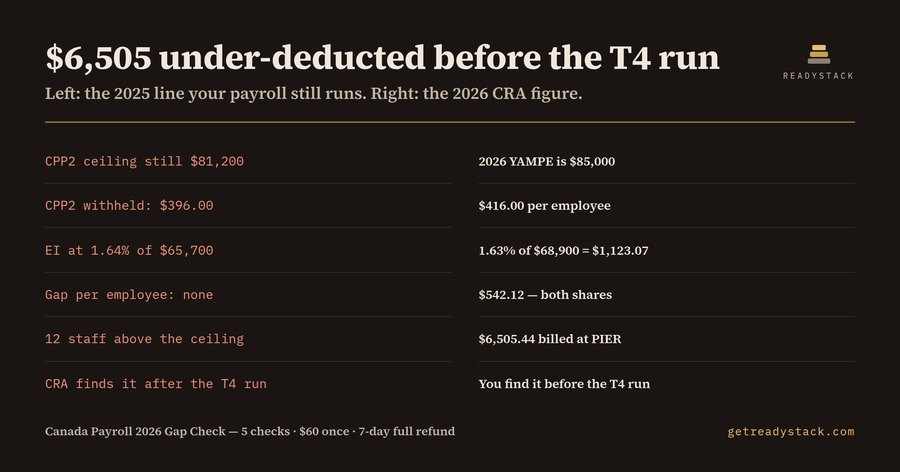 2026 CPP / CPP2 / EI deduction and under-deduction gap
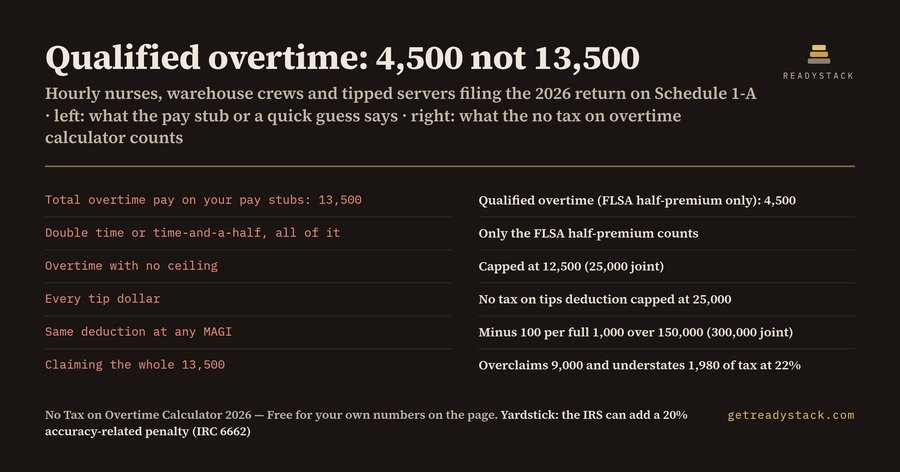 No Tax on Overtime Calculator 2026: FLSA Premium and Tips
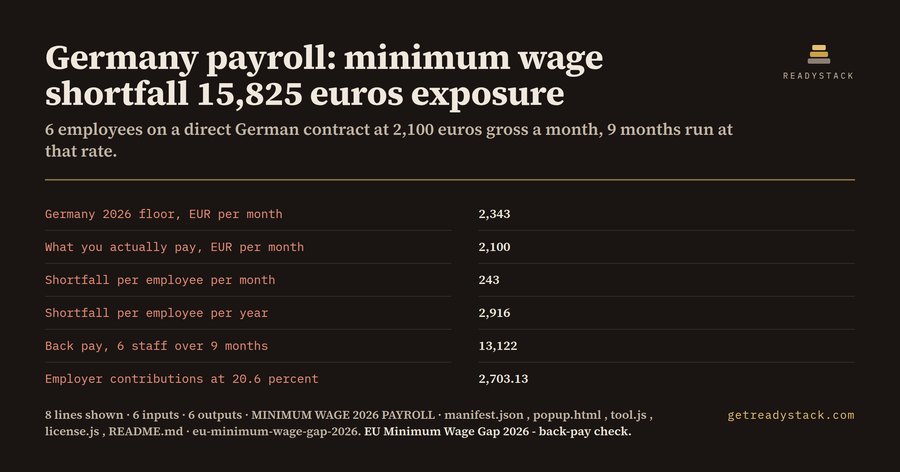 2026 Minimum Wage gap and payroll back-pay exposure